What to write on an invitation to welcome a baby girl
Brit bat, zeved habat, simchat bat: different names, different forms, and one thing in common: no race against the clock.
On this page
Unlike the brit milah of a boy, there is no single, universally codified ceremony for welcoming a baby girl in Jewish tradition, and that is precisely what makes the wording a little freer to write. Depending on the community and the family, you will see brit bat (“covenant of the daughter”), zeved habat (“gift of the daughter,” a custom more common among Sephardic families), simchat bat (“joy of the daughter”), or simply a welcome party with no particular ritual name. The form varies just as much: a blessing at the synagogue, a ceremony at home, a festive meal among close family and friends. None of these is “the real one.” Each family chooses according to its customs, its movement, or simply what feels like them.
Another big difference from a brit milah: there is no eighth-day rule. The parents choose the date, often a few weeks after the birth, which leaves plenty of time to prepare a nice wording and a real design, and to send the invitation well in advance, something the parents of a boy do not have time for.
What the invitation should always include
- The name you give the ceremony (brit bat, zeved habat, simchat bat, or simply “welcome party”)
- The baby girl’s first name (often already known and announced, unlike a boy’s Hebrew name at his brit milah)
- The names of the parents
- The date, time and place
- The exact nature of the occasion (blessing, reading, simple meal) so guests know what to expect
- The reply link
If you are not sure which term to use, a neutral phrase such as “we invite you to celebrate the birth of our daughter” always works and avoids borrowing a ritual word that does not quite match what you are organizing.
Example wordings
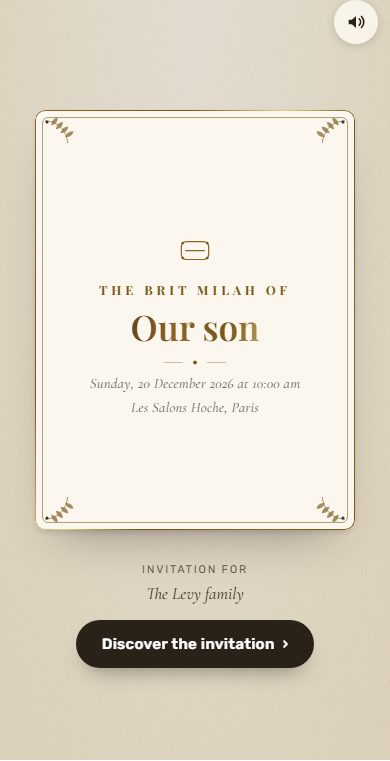
Mr. and Mrs. Amselem are delighted to announce the birth of their daughter Noa and invite you to her brit bat Sunday, June 27, 2027 at 11:00 a.m. [Name] Synagogue, [address] Lunch will follow the ceremony Please reply by June 20
Our daughter is here! We would love to have you over to celebrate the arrival of Noa Sunday, June 27, 2027, starting at 4:00 p.m. [Address] Afternoon treats and a lot of happiness on the menu. Please reply by June 20
בס״ד Mr. and Mrs. Amselem have the honor of announcing the birth of their daughter Noa and invite you to her zeved habat Sunday, June 27, 2027 at 11:00 a.m. [Venue] Lunch to follow Mazal tov!
בס״ד With great joy, the Yehezkel family invites you to the simchat bat of Ayala Sunday, June 27, 2027, 11:00 a.m. [Venue, address] Festive meal after the ceremony Kindly reply by June 20
Welcome, Noa Amselem Sunday, June 27, 2027, 4:00 p.m. [Venue] RSVP: [link]
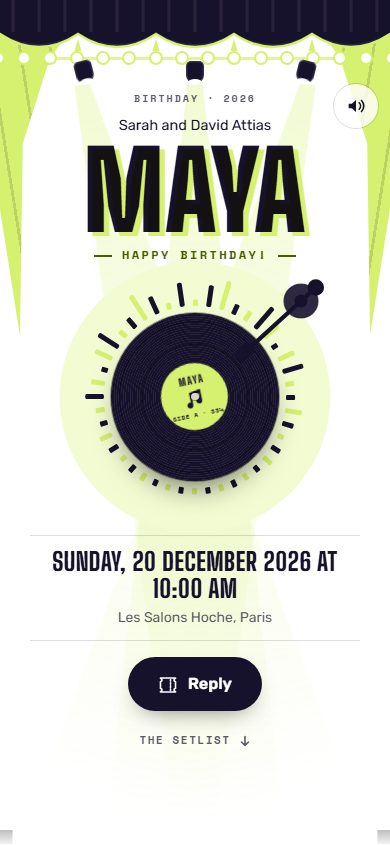
She is six weeks old, she sleeps (sometimes), and she already has everyone wrapped around her little finger. Come celebrate Noa’s arrival with us. No race against the clock this time: we took the time to organize everything properly. Sunday, June 27, 4:00 p.m., [venue]. Please reply by June 20. We can’t wait to introduce her to you.
Honorifics
A girl’s Hebrew name is said “X bat (daughter of) Y” (בת), Y usually being the father’s name: for example “Noa bat Yosef”. If a grandparent who has passed away is named in connection with the baby’s name (often given in his or her memory), add z"l after the name: zichrono livracha for a man, zichrona livracha for a woman (“of blessed memory”). For a rabbi or rabbanit named in the text, shlit"a remains the traditional honorific.
Common mistakes to avoid
- Using the words “brit milah” for a girl out of habit: it is not the same ceremony. Use brit bat, zeved habat, simchat bat, or a neutral phrase, depending on what you are really organizing.
- Presenting a simple family party as a codified ritual ceremony: if you are not holding a formal blessing, just say you are celebrating the birth, without borrowing inaccurate ceremonial language.
- Carrying over the “eighth-day emergency” tone of a brit milah out of habit: here the date is chosen well in advance, and the wording can (and should) be as polished as any other invitation.
- Forgetting to say what the occasion is (a blessing? a meal? both?): guests who do not know your family’s customs will appreciate knowing what to expect.
Checklist: don’t forget
- Name given to the ceremony (or a neutral phrase if you prefer)
- The baby girl’s first name
- Names of the parents
- Date, time and place
- The exact nature of the occasion (blessing, meal, both)
- Reply link and deadline
What’s next?
An invitation true to your traditions.
In 4 languages, with Hebrew set the way it should be and replies tracked household by household.
Related pages
- Brit milah
What to write on a brit milah invitation
The date is set by the birth, not by you: seven ways to announce a brit milah with grace, in a matter of days.
- Birthday
What to write on a birthday invitation
A birthday has no fixed ritual, which leaves all the room for the right tone. Six examples, from understated to festive.